
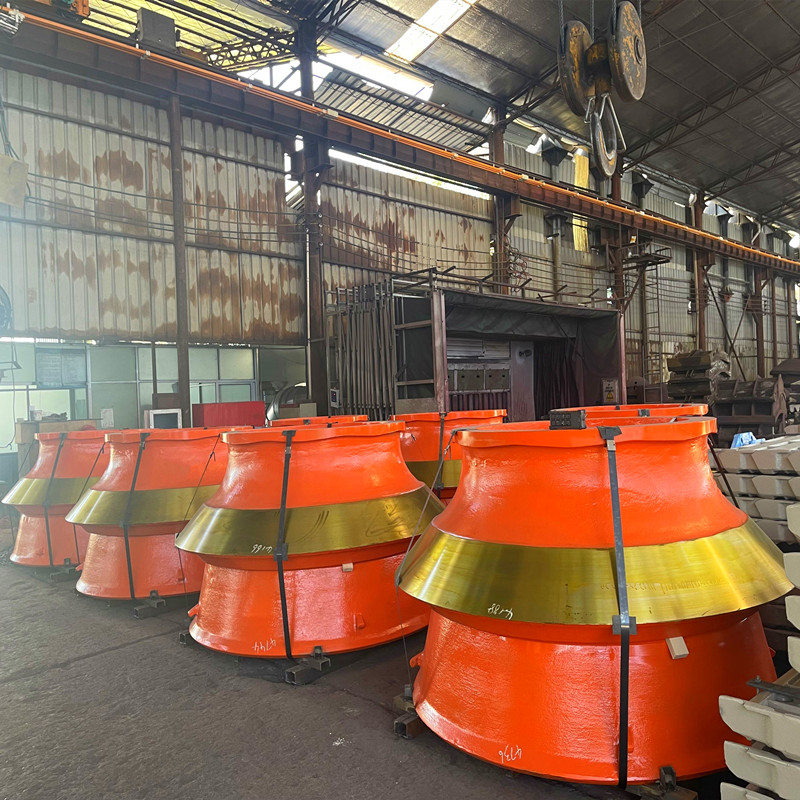
The mining industry continually demands robust and reliable equipment to ensure operational efficiency and cost-effectiveness. Among the critical components of mineral processing is the sag mill, a large, rotating cylindrical device used for grinding ores into finer particles. The durability and performance of sag mill parts significantly influence the lifespan and productivity of the mills. Recent advancements and developments in sag mill parts materials and manufacturing processes are transforming asset reliability, minimizing downtime, and improving overall milling efficiency.
**Criticality of Sag Mill Parts in Mining Operations**
Sag mills operate under highly abrasive conditions, grinding rock and ore with high impact forces. The mill shells, liners, grinding media, and other wear parts endure intense stress and progressive wear. Replacing worn parts is costly and time-consuming, often leading to significant production losses. Therefore, the mining sector seeks sag mill parts that offer longer service life, greater resistance to abrasion, and improved mechanical properties.
Organizations specializing in sag mill components now focus on innovative materials and tailored solutions designed to meet specific operational needs. These advancements enable increased mill availability, reduced maintenance frequency, and optimal grinding performance.
**Material Innovations Driving Longer Life Span**
A leading supplier in the sag mill parts market continues to provide a comprehensive range of materials suitable for various operational environments. Their portfolio includes standard manganese (Mn) steel, high-chromium (Hi-Cr) iron, alloy steel, and carbon steel, each selected based on the particular wear, impact, and corrosion challenges encountered.
Standard Mn steel remains a popular choice due to its excellent work-hardening capability and toughness, making it effective against impact wear and abrasion. Hi-Cr iron offers superior hardness and abrasion resistance, ideal for applications where grinding surfaces face extensive wear. Alloy and carbon steels provide tailored mechanical properties to meet diverse application requirements.
Beyond these conventional materials, the company is pioneering tailored wear solutions designed explicitly for extended service life. These solutions incorporate advanced materials such as titanium carbide (TiC), ceramics, and chromium (Cr) inserted alloys. These additives and insertions enhance hardness and wear resistance, significantly prolonging the service intervals of sag mill parts.
**Tailored Wearing Solutions for Optimized Performance**
The integration of TiC, ceramic, and Cr inserted alloys in sag mill parts represents a new frontier in wear-resistant technology. Titanium carbide is renowned for its extreme hardness and chemical stability, providing outstanding resistance to abrasive wear. Ceramic components also offer exceptional hardness and thermal stability, making them ideal in high-temperature and high-wear scenarios.
Chromium-inserted alloys contribute additional hardness and oxidation resistance, key factors in extending the life of mill liners and grinding surfaces exposed to corrosive processing environments. By customizing the composition and structure of these materials, manufacturers ensure compatibility with the operational profile of the mill, maximizing performance while reducing the frequency of part replacements.
**Enhancing Operational Efficiency through Material Science**
The mining industry's shift toward advanced sag mill parts aligns with its broader goals of operational efficiency and sustainability. Long-lasting wear parts reduce the frequency of mill shutdowns necessary for maintenance, boosting overall equipment effectiveness. This improvement translates into higher throughput, lower operational costs, and enhanced safety, as fewer interventions in hazardous mill environments are required.
Moreover, improved wear resistance minimizes the environmental footprint by reducing material waste and lowering the energy consumption associated with frequent manufacturing and transportation of replacement parts.
**Future Trends and Industry Implications**
As mineral resources become more challenging to process, the demand for cutting-edge sag mill parts will only increase. Manufacturers will continue to explore novel composites and hybrid materials that combine toughness, hardness, and corrosion resistance. Additive manufacturing and other advanced fabrication technologies may also play a crucial role in enabling bespoke part designs tailored to specific milling conditions.
Additionally, the digitalization of mining operations and predictive maintenance technologies will facilitate better monitoring of wear part performance, enabling timely interventions and supply chain optimization.
**Conclusion**
The development of advanced sag mill parts, leveraging both traditional and innovative materials, is vital for enhancing the longevity and effectiveness of grinding mills in the mining industry. Companies providing a wide range of standard materials, coupled with specialized customized wear solutions like TiC, ceramic, and Cr inserted alloys, are at the forefront of driving this transformation.
By prioritizing material excellence and tailored engineering, these suppliers not only help mining companies minimize downtime and reduce costs but also contribute to more sustainable and efficient mineral processing operations. As the industry evolves, it will continue to benefit from ongoing innovation in sag mill components, ultimately supporting the global demand for minerals and metals necessary for economic development and technological advancement.