
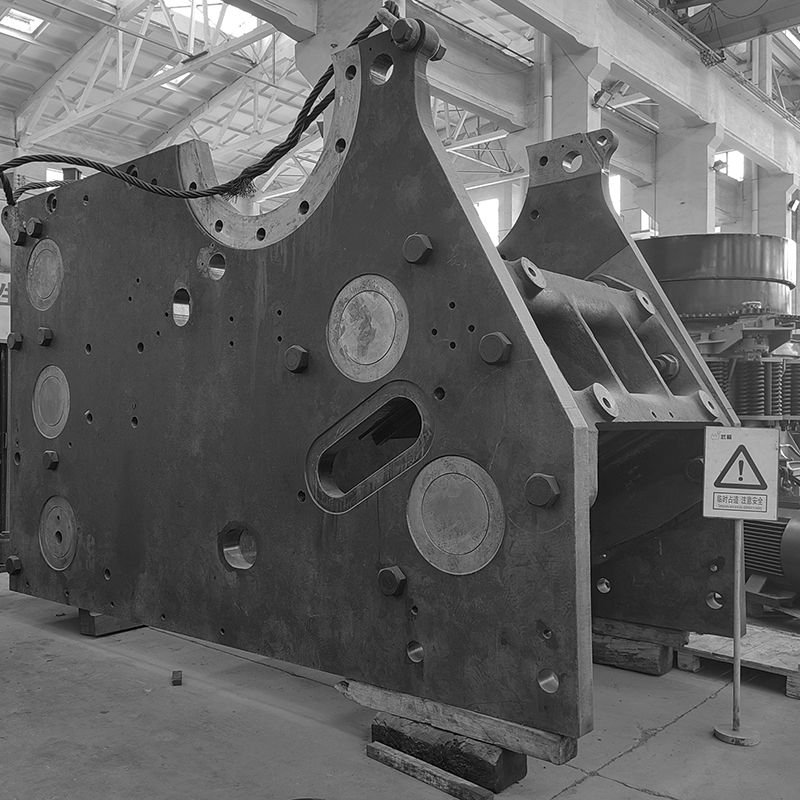
In the ever-evolving mining and mineral processing industries, the performance and durability of sag mill components play a pivotal role in optimizing operational efficiency and reducing downtime. As the demand for higher throughput and lower maintenance costs intensifies, companies worldwide are seeking advanced solutions to extend the lifespan of critical wear parts. Recent developments in material technology, coupled with tailored manufacturing processes, are transforming the landscape of sag mill maintenance and replacement, offering promising benefits to operators everywhere.
**The Challenge of Sag Mill Wear Parts**
Sag mills, or semi-autogenous grinding mills, are essential in the crushing and grinding process within mining operations, where large rocks are broken down to extract valuable minerals. The liners and grinding media within these mills endure extreme wear and tear due to the abrasive nature of the material and the intense mechanical forces involved. Consequently, frequent replacement of life-critical components such as liners, grinding balls, and segments is necessary — a process that can be both costly and time-consuming.
Historically, manufacturers have relied on conventional wear-resistant materials such as standard manganese steel and high-chrome iron to produce sag mill parts. While these materials provide a reasonable balance between toughness and wear resistance, the harsh operating conditions often lead to premature failure, escalating operational costs. The increasing complexity of mineral deposits and the push for higher processing capacities have further underscored the need for advanced material solutions.
**Tailored Materials to Extend Wear Life**
Addressing these challenges, industry leaders in wear part manufacturing are now offering a broader spectrum of material options tailored to specific operational conditions. By leveraging innovations in metallurgy and material science, suppliers are delivering components made from specialized alloys and engineered ceramic composites that significantly outperform traditional wear parts.
A noteworthy provider in this sector supplies a diverse range of materials including:
- **Standard Manganese Steel (Mn Steel):** Known for its work-hardening properties, manganese steel remains a cost-effective choice for many sag mill liners, particularly where toughness is prioritized.
- **High-Chrome Iron (Hi-Cr Iron):** With its high hardness and resistance to abrasive wear, high-chrome iron is suitable for conditions with less impact but severe abrasion.
- **Alloy Steel:** Various alloy steels are utilized to balance impact resistance and wear life depending on the grade and composition adjustments.
- **Carbon Steel:** Often used for structural components requiring strength rather than wear resistance.
Importantly, the ability to customize the alloy composition and integrate cutting-edge materials such as Titanium Carbide (TiC), ceramic compounds, and chromium-inserted alloys has revolutionized the durability and functional lifespan of sag mill components.
**Advanced Materials: The Game-Changers**
- **Titanium Carbide (TiC) Inserted Alloys:** TiC is an extremely hard ceramic material that, when distributed within an alloy matrix, can dramatically improve wear resistance against abrasive media. The TiC particles help reduce liner wear rates and offer better resistance to gouging and scratching.
- **Ceramic-Enhanced Liners:** Ceramics are known for their exceptional hardness and wear resistance. By incorporating ceramic elements into sag mill parts, manufacturers produce liners capable of withstanding harsher grinding conditions without sacrificing toughness.
- **Chromium-Inserted Alloys:** Adding chromium enhances corrosion resistance and hardness, making these alloys particularly effective in wet or chemically aggressive environments common in mineral processing.
These advances allow operators to select materials not only based on cost but aligned precisely with the performance demands of their specific milling circuits, thereby optimizing uptime and reducing overall operational expenditures.
**A Strategic Partner in Wear Solutions**
To meet the growing demand for more reliable and longer-lasting sag mill parts, companies specializing in wear parts manufacturing are combining their metallurgical expertise with extensive testing capabilities and customer collaboration. Such a holistic approach ensures that the components delivered do not merely fit the mill but are optimized for the specific ore type, mill configuration, and operating conditions.
By offering both standard materials and custom tailoring solutions, these manufacturers empower mining operations to tackle the toughest grinding challenges with confidence. The tailored wearing solutions — encompassing advanced materials like TiC, ceramic, and chromium-inserted alloys — offer an improved service life that outperforms traditional options by a significant margin.
**Industry Impact and Future Outlook**
The adoption of these innovative materials and configurations has led to notable improvements in sag mill efficiency worldwide:
- Extended liner life reduces the frequency of mill shutdowns and associated maintenance costs.
- Improved wear resistance leads to more consistent grinding performance, enhancing downstream processing reliability.
- Advanced materials reduce total cost of ownership despite potentially higher upfront costs, due to lower replacement frequency and minimized downtime.
Looking ahead, continual research into new alloys and composite materials holds promise for further breakthroughs. The integration of digital monitoring and wear prediction technologies coupled with bespoke material design could enable predictive maintenance regimes and further cost savings.
**Conclusion**
As mining operations strive for higher productivity with tighter margins, the importance of durable, high-performance sag mill parts becomes ever more critical. The availability of a broad spectrum of wear resistant materials — ranging from traditional manganese steel to advanced TiC, ceramic, and chromium-enhanced alloys — provides operators with invaluable options for extending component life and optimizing mill performance.
Collaborating with expert wear solution providers ensures the selection of the right materials tailored to rigorous operating conditions, ultimately driving enhanced operational efficiencies and profitability. In an industry defined by harsh conditions and high operational stakes, leveraging these material innovations in sag mill parts represents a vital step forward in sustainable and cost-effective mineral processing.