
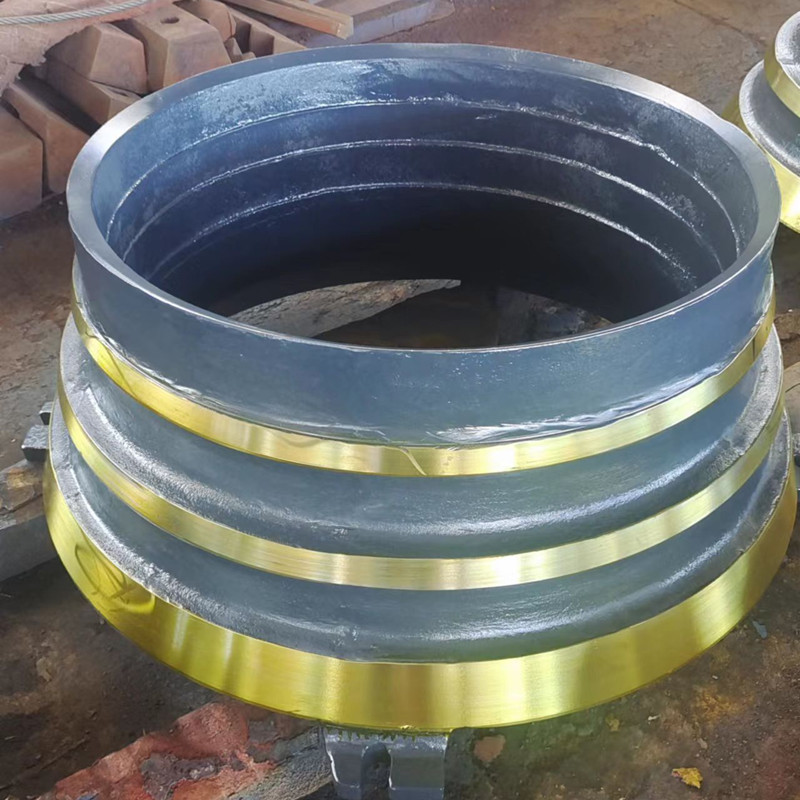
In the evolving world of mineral processing and grinding technology, the significance of ball mill liners cannot be overstated. These critical components not only safeguard the mill’s structural integrity but also directly influence the grinding efficiency, operational costs, and overall productivity of mining and cement industries. Recent developments and industry insights underline the importance of selecting the right types of ball mill liners, tailored to specific operational demands.
### Overview of Ball Mill Liners and Their Importance
Ball mill liners are the protective wear parts installed inside a ball mill’s cylindrical shell. Their main function is to shield the mill shell from impact, abrasion, and corrosion, while maximizing grinding efficiency by lifting the grinding media and ensuring consistent grinding motion. Without proper liners, mills would experience accelerated wear, unexpected downtimes, and increased maintenance costs, leading to inefficient grinding and compromised product quality.
The diversity in ore types, grinding media, mill sizes, and processing environments necessitates a variety of ball mill liners optimized for different conditions. These liners vary in material composition, design pattern, and lifespan. Understanding these characteristics is essential for mill operators seeking to optimize grinding operations.
### Common Types of Ball Mill Liners
1. **Manganese Steel Liners**
Manganese steel, noted for its work-hardening properties, is a staple in ball mill liners, especially where high impact resistance is required. These liners initially have moderate hardness but become harder with use, adapting to the grinding conditions. Manganese steel liners are particularly effective in primary grinding operations where heavy-impact loads and abrasive materials are present.
2. **High Chromium Iron Liners**
For moderate to high abrasion conditions, high chromium iron liners offer superior hardness and wear resistance compared to manganese steel. Their brittleness is a consideration; however, their excellent corrosion resistance makes them suitable for wet grinding or applications involving corrosive slurries.
3. **Alloy Steel Liners**
Alloy steel liners bring a balance of toughness and wear resistance through the addition of elements such as nickel, molybdenum, and chromium. These liners perform well in a range of grinding environments, and their mechanical properties can be engineered to suit specific operational parameters.
4. **Carbon Steel Liners**
Carbon steel liners are typically employed where abrasion levels are relatively low, or as base liners to support harder materials layered on top. While not as wear-resistant as manganese or chromium alloys, carbon steel offers cost efficiencies and adequate protection in less demanding situations.
5. **Ceramic and Composite Liners**
With advancements in material technology, ceramic and composite liners have emerged as specialized solutions for extending liner life and enhancing grinding performance. These liners incorporate materials like titanium carbide (TiC), ceramics, and chromium-inserted alloys, which exhibit exceptional hardness, abrasion resistance, and chemical stability.
### Tailored Solutions for Extended Lifespan
Recognizing the need for operational efficiency and cost savings, modern milling operations are increasingly adopting tailored liner solutions designed to maximize service life and performance. This approach involves customizing the liner material, thickness, and design geometry based on the mill’s operating conditions, grinding media, and the nature of the material being processed.
A leading company in the supply of these innovative liners provides not only a broad range of standard manganese steel, high chromium iron, alloy steel, and carbon steel liners but also bespoke solutions featuring TiC, ceramic, and chromium-inserted alloys. These advanced materials significantly increase the service life of liners compared to conventional alternatives.
For instance, titanium carbide (TiC) enhanced liners offer remarkable wear resistance due to the hardness and toughness of TiC particles embedded in the alloy matrix. Similarly, ceramic liners bring exceptional corrosion and wear resistance that can handle corrosive slurries while minimizing shut-down frequency for liner replacements.
Moreover, chromium-inserted alloys combine increased hardness with structural strength, providing a robust option for mills processing highly abrasive ores.
### Industry Impact and Future Outlook
The adoption of these advanced liner materials and tailored designs has multiple impactful benefits. Prolonged liner life reduces downtime and maintenance costs, while optimized liner design enhances grinding efficiency by ensuring uniform particle size distribution and enabling more consistent milling performance.
Furthermore, these innovations contribute to environmental sustainability by minimizing raw material consumption for replacements and energy costs associated with frequent mill stoppages.
The ball mills' operational efficiency and profitability are further enhanced when liners are matched precisely to the specific milling conditions rather than relying on generic, off-the-shelf products. As this trend grows, suppliers and manufacturers continue to invest in research and development to produce even more performance-oriented and cost-effective liner solutions.
### Conclusion
Ball mill liners remain a pivotal factor in the performance and durability of grinding mills. With the continuous industry shift towards customized, high-performance materials such as manganese steel, high chromium iron, alloy steel, carbon steel, and the latest advancements involving TiC, ceramic, and chromium-inserted alloys, mining and cement industries are well-positioned to achieve operational excellence.
These materials and designs not only improve liner longevity but also optimize grinding efficiency, ensuring consistent production quality while controlling operational costs. Embracing such innovative, tailor-made liner solutions signifies a strategic move for customers aiming to sustain competitive advantages in an increasingly demanding market.
As ball mill technology progresses, the collaboration between mill operators and supplier companies focused on advanced liner solutions will be critical in driving forward the next generation of operational improvements, enabling more sustainable and efficient mineral processing operations worldwide.