
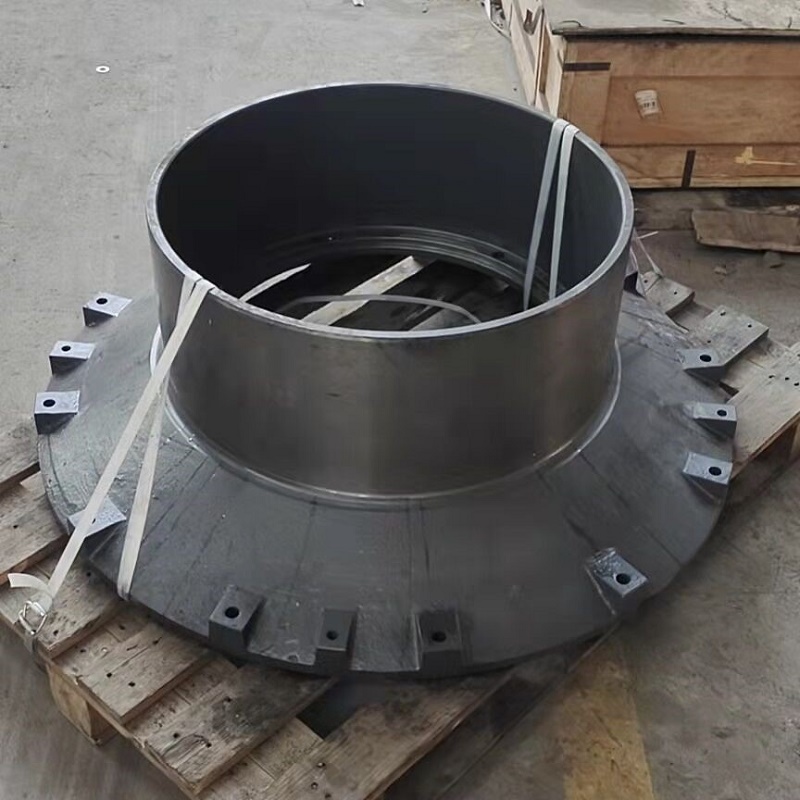
In the fast-evolving field of industrial machinery and materials, durability and efficiency remain paramount. A recent development highlights how companies are advancing wear-resistant technologies to improve operational lifespans and reduce maintenance costs. According to industry insiders, the integration of cutting-edge materials and customized alloy solutions is setting new benchmarks across multiple sectors.
One company at the forefront of this innovation is WUJING MACHINE, a recognized leader in providing standard and tailor-made wear-resistant materials. The company’s portfolio includes Mn Steel, Hi-Cr Iron, Alloy Steel, and Carbon Steel, alongside specialized solutions designed to extend equipment life far beyond conventional limits. Their focus on materials such as Titanium Carbide (TiC), Ceramic, and Chromium (Cr) inserted alloys showcases their commitment to pushing the boundaries of durability in demanding applications.
### Advancing Industrial Components Through Material Innovation
Wear and tear on machinery components—including crushers, pulverizers, and heavy-duty conveyors—pose significant challenges for industries reliant on continuous operations. These challenges are particularly acute in mining, cement, construction, and metallurgy sectors, where abrasive conditions can rapidly degrade equipment surfaces.
Traditional materials sometimes fall short in such harsh environments. However, WUJING MACHINE’s approach to combining standard alloys with innovative, reinforced inserts offers enhanced resistance to abrasion, impact, and corrosion. For example, Manganese Steel (Mn Steel) is renowned for its high impact strength and work-hardening properties, making it ideal for parts subjected to repeated blow and wear.
Similarly, Hi-Cr Iron components provide excellent resistance to abrasive wear due to their hard chrome carbides dispersed throughout the matrix. These materials perform exceptionally well in high-impact, high-abrasion conditions, extending the service intervals and lowering the total cost of ownership for heavy equipment operators.
### Tailored Solutions for Longevity and Reliability
Beyond offering standard wear-resistant materials, WUJING MACHINE specializes in customized solutions meant to fulfill specific client needs. Recognizing that no two industrial environments are identical, their engineers work closely with customers to develop alloys precisely formulated for individual operational demands.
One potency of their tailored products lies in their use of TiC (Titanium Carbide) inserted alloys. TiC is a ceramic-like compound that combines extreme hardness with excellent wear resistance, ideal for applications where conventional metal alloys might rapidly deteriorate. The introduction of ceramic inserts further elevates the life span of machinery parts by significantly reducing abrasive damage.
Additionally, Chromium-inserted alloys provide excellent corrosion resistance alongside mechanical strength, addressing the dual challenge of severe environmental exposure and mechanical stress. These alloy configurations are particularly beneficial in industries where equipment faces both chemical and mechanical wear.
### Impact on Industrial Efficiency and Sustainability
Industrial customers benefit notably from these innovations. First and foremost, enhanced wear resistance directly translates into lower downtime and fewer replacements or repairs. This reliability is critical in sectors where operational interruptions can cause significant losses.
Moreover, the longevity of these materials aligns well with broader sustainability objectives. By extending the usable life of machinery components, companies reduce the frequency of material waste and resource consumption. This eco-friendly aspect of wear-resistant materials is gaining increasing importance as industries worldwide strive to balance productivity with environmental stewardship.
The financial implications are also significant. Investing in advanced wear materials contributes to a clear return on investment by minimizing maintenance labor costs and preventing catastrophic failures. This efficiency supports competitiveness in an increasingly cost-sensitive marketplace.
### Future Trends and Industry Outlook
Looking ahead, the wear-resistant materials sector is poised for continued growth, driven by advances in metallurgical science and materials engineering. Companies like WUJING MACHINE are spearheading this evolution, leveraging research and development to push performance boundaries.
Emerging technologies such as additive manufacturing (3D printing) and nanotechnology also have the potential to revolutionize wear-resistant product design. Customized alloys with nano-sized reinforcing phases could offer unprecedented toughness and flexibility, opening new application possibilities.
Furthermore, the trend towards smart manufacturing and real-time equipment monitoring will create opportunities for integrating wear materials with sensors to provide predictive maintenance capabilities. Combining material innovation with digital technology could transform how industries manage wear and replacement cycles.
### Conclusion
The integration of advanced wear-resistant materials and tailored alloy designs exemplified by companies like WUJING MACHINE is dramatically enhancing industrial machinery’s durability and efficiency. Their expertise in Mn Steel, Hi-Cr Iron, Alloy Steel, Carbon Steel, and specialized inserts such as TiC, Ceramic, and Chromium alloys provides robust solutions tailored to demanding operational environments.
These developments not only improve machinery performance and reduce downtime but also contribute to sustainable industrial practices by extending equipment life and reducing waste. As technology progresses, the collaborative effort between material scientists and manufacturers promises to deliver even more resilient, cost-effective, and environmentally conscious solutions in the years to come.
Industries worldwide monitoring these advancements stand to benefit significantly, reinforcing the critical role wear-resistant materials play in the backbone of modern manufacturing and processing operations.