
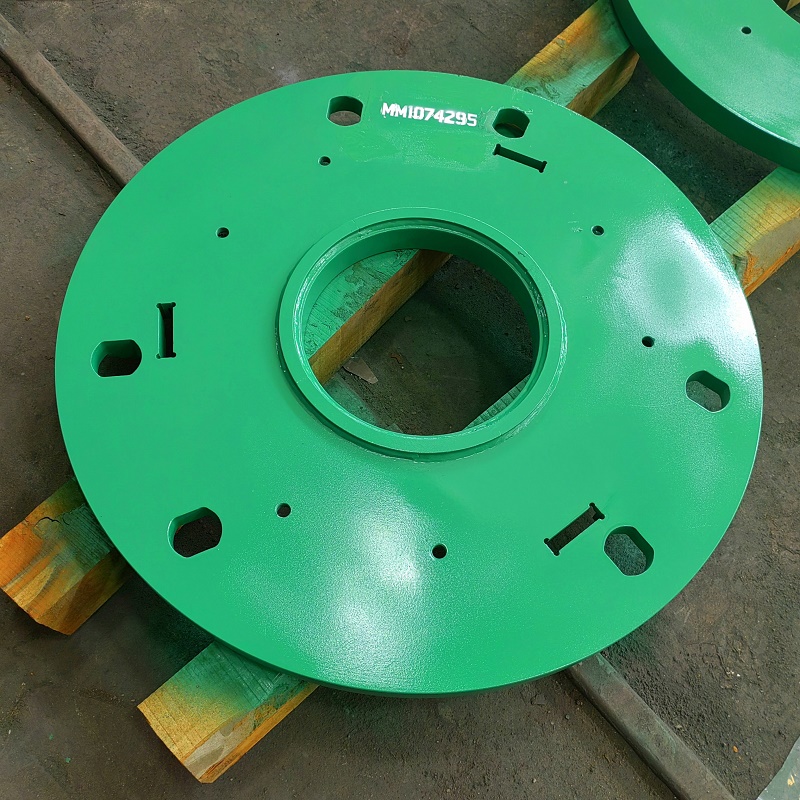
In today’s rapidly evolving industrial landscape, advances in wear-resistant materials play a crucial role in enhancing equipment durability and operational efficiency. Recent developments highlight the importance of tailored solutions that combine standard and advanced materials to meet the diverse needs of heavy-duty applications. This evolution is exemplified by companies specializing in high-performance alloys and composite materials, which offer customers extended service life and reduced maintenance costs.
One such company, WUJING MACHINE, stands out for its comprehensive range of wear-resistant products and customized solutions that address the challenges faced by industries reliant on heavy machinery. By supplying a broad spectrum of materials—including standard manganese (Mn) steel, high-chromium (Hi-Cr) iron, alloy steel, and carbon steel—alongside advanced composite alloys such as titanium carbide (TiC), ceramic, and chromium-inserted alloys, the company has positioned itself at the forefront of abrasion resistance technology.
**Tailored Solutions for Diverse Industrial Needs**
The wear and tear on machinery components, especially those involved in mining, construction, cement manufacturing, and metallurgy, significantly impact operational uptime and costs. Components like crusher liners, grinding mills, and shovel buckets are constantly under harsh abrasive and impact conditions. Traditional materials such as manganese steel provide strong resistance to impact and moderate abrasion, while high-chromium iron offers excellent hardness and wear resistance under certain conditions.
However, standard materials sometimes fall short in extreme environments where abrasion and corrosion accelerate component degradation. To overcome this limitation, WUJING MACHINE’s tailored solutions integrate advanced materials like TiC, ceramics, and chromium-inserted alloys. These sophisticated materials exhibit superior hardness and chemical stability, dramatically increasing the lifespan of machinery components in high-stress scenarios.
**Understanding the Material Spectrum**
- **Manganese Steel:** Known for its toughness and ability to work-harden in response to impact, Mn steel remains a favored choice for components that require resistance to shock and moderate abrasion. Its cost-effectiveness and availability make it a baseline solution for many applications.
- **High-Chromium Iron:** With a higher hardness rating than Mn steel, Hi-Cr iron excels in resisting abrasive wear, especially where impact forces are not as intense. Its microstructure fosters excellent resistance to scratching and gouging.
- **Alloy Steel & Carbon Steel:** These steels offer a balance of strength, toughness, and hardness, often used where a combination of wearing and structural strength is essential.
- **Titanium Carbide (TiC) Inserted Alloys:** TiC’s remarkable hardness and thermal stability make it ideal for highly abrasive applications. When incorporated into alloy matrices, these inserts dramatically reduce wear rates, prominently enhancing component life.
- **Ceramic Materials:** Ceramic composites bring unmatched wear resistance, particularly in abrasive slurry environments. Their resistance to heat and chemical degradation further extends equipment longevity.
- **Chromium-Inserted Alloys:** The introduction of chromium particles into alloys increases hardness and corrosion resistance. These materials are increasingly used in components subject to both wear and oxidative environments.
**Impact on Industrial Productivity**
The integration of these materials into machinery parts directly correlates with reductions in downtime and maintenance expenses. When machinery parts last longer, operators benefit from fewer replacements and lower inventories of spare parts. Furthermore, enhanced wear resistance translates into operational consistency and improved safety, as components are less likely to fail unexpectedly.
Clients across sectors such as mining have reported significantly extended service intervals for their equipment following upgrades to advanced wear-resistant materials. For example, shovel bucket liners reinforced with TiC and ceramic technologies have demonstrated lifespan improvements of up to 200% compared to standard steels. This level of performance not only lowers overall lifecycle costs but also helps companies achieve their sustainability goals by reducing material waste and energy consumption involved in manufacturing replacements.
**Commitment to Innovation and Customization**
Recognizing that no single material solution fits all scenarios, companies like WUJING MACHINE focus on providing tailored wearing solutions based on in-depth analysis of customers’ operational environments. By combining standard steels with advanced composite inserts, the company customizes products to target specific wear mechanisms—impact, abrasion, corrosion, or a combination thereof.
This client-centric approach involves close collaboration with engineering teams to analyze operational data and perform wear simulation tests. The resulting product designs optimize material selection and manufacturing processes, ensuring the right balance between toughness and hardness.
**Looking Forward**
As industries continue to demand stronger, longer-lasting materials to improve productivity and cut costs, the role of companies supplying advanced wear-resistant solutions will only grow in significance. The trend toward material customization, integrating innovative alloys and composites, aligns with broader goals of resource efficiency and sustainability.
In summary, the blend of standard Mn steel, Hi-Cr iron, alloy steel, and carbon steel with advanced TiC, ceramic, and chromium-inserted alloys represents the cutting edge of abrasion resistance technology. This synergy delivers tailored, high-performance products that enhance equipment lifespan, operational efficiency, and economic viability across multiple heavy industries.
With their commitment to material innovation and customer-focused customization, companies in this sector are well-positioned to meet the demands of modern industry and contribute to a more durable and efficient future of heavy machinery operation.