
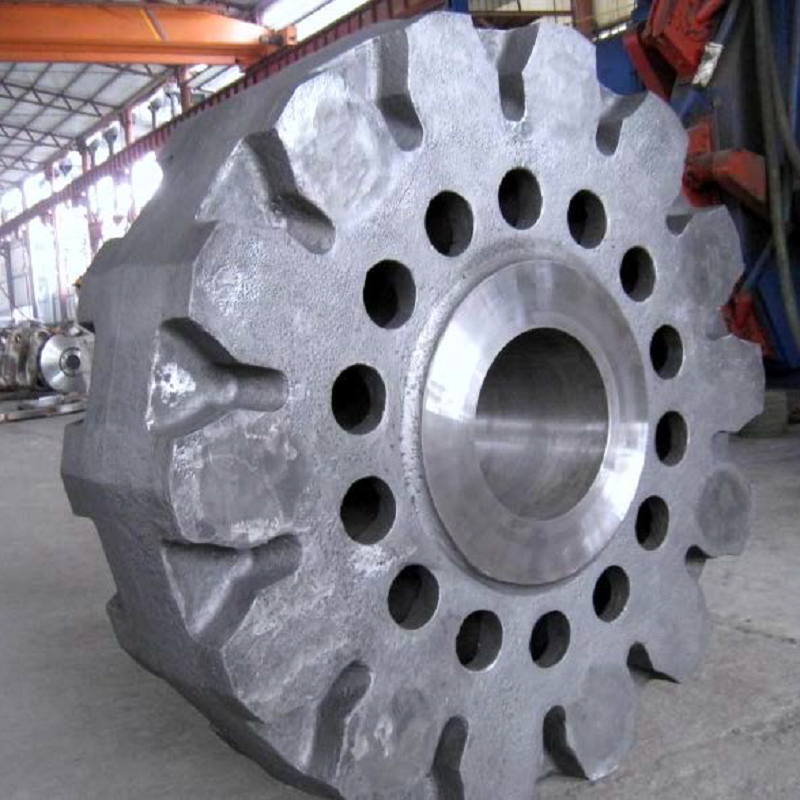
In the ever-evolving industry of heavy machinery and metal manufacturing, the demand for materials with enhanced durability and longer service life is paramount. Ferrous metal alloys, known for their robustness and versatility, continue to lead advancements in wear-resistant technology, playing a critical role in various industrial applications. Addressing this need, companies like WUJING MACHINE are at the forefront of providing both standard and customized ferrous alloy solutions that extend the lifespan and performance of machinery components.
### The Importance of Ferrous Metal Alloys in Industry
Ferrous metal alloys, which primarily consist of iron combined with carbon and other elements, have been instrumental in engineering durable components across multiple sectors. Their mechanical strength, resistance to wear, and affordability make them the preferred choice for manufacturing parts exposed to harsh conditions, such as mining, construction, and machinery operations.
Traditionally, manganese steel, carbon steel, and alloy steel have been widely used due to their toughness and ability to absorb impact without significant deformation. However, with increasing operational demands and the push for higher efficiency, standard materials sometimes fall short when subjected to extreme abrasion and mechanical stress.
### WUJING MACHINE: Industry Leader in Steel and Alloy Excellence
WUJING MACHINE stands out as a key player in providing both standard and specially engineered ferrous metal alloys targeted at solving wear and durability challenges. The company offers a comprehensive portfolio, including:
- **Standard Manganese Steel (Mn Steel):** Known for its work-hardening properties, manganese steel is ideal for heavy-impact and abrasive environments.
- **High-Chromium Iron (Hi-Cr Iron):** This alloy exhibits excellent wear resistance due to the hard chromium carbide phases embedded in the iron matrix, making it suitable for applications involving abrasion and erosion.
- **Alloy Steel and Carbon Steel:** These steels provide a balance of strength, toughness, and wear resistance, delivered with predictable performance across different industrial needs.
Beyond these, WUJING MACHINE specializes in tailored wear-resistant solutions designed to extend the operational life of components significantly. Through innovative material engineering, the company incorporates hard phases such as titanium carbide (TiC), ceramic, and chromium (Cr) inserts within alloy matrices.
### Advancements with Tailored Wearing Solutions
The integration of materials like TiC, ceramics, and chromium inserts offers substantial improvements in wear resistance, particularly in environments where standard steels may degrade quickly.
- **Titanium Carbide (TiC):** TiC is a hard ceramic material known for its exceptional hardness and stability at high temperatures. When embedded into steel, TiC particles act as a wear-resistant barrier, significantly improving the alloy's resistance against abrasion.
- **Ceramic Inserts:** Ceramics offer superior hardness and resistance to chemical corrosion. Incorporating ceramic phases into steel matrices enhances the material's ability to withstand high wear rates, especially in applications involving abrasive slurries or erosive particles.
- **Chromium (Cr) Inserts:** Chromium additions increase hardness and corrosion resistance. Chromium carbides precipitated out in the alloy improve toughness without compromising wear resistance, making Cr-inserted alloys ideal for heavy-duty industrial use.
By tailoring these elements within ferrous alloys, WUJING MACHINE crafts solutions that meet specific customer needs, ensuring components last longer and machines operate with reduced downtime and maintenance costs.
### Impact on Industrial Efficiency and Sustainability
The adoption of advanced ferrous metal alloys with enhanced wear properties has a profound effect on industrial productivity. Machinery parts that resist wear longer require fewer replacements or repairs, leading to lowered operational expenses and minimized interruptions in production.
Moreover, extending the service life of components aligns with sustainability goals by reducing waste and the environmental footprint associated with frequent part manufacturing and disposal. Companies leveraging these advanced alloys contribute to a more sustainable industrial ecosystem through resource conservation and improved machine efficiency.
### Market Trends and Future Outlook
As industries expand globally and technology pushes equipment performance boundaries, the demand for superior wear-resistant materials is expected to grow steadily. Research into combining ferrous alloys with novel ceramic or carbide reinforcements continues to open new possibilities in material science.
WUJING MACHINE’s commitment to innovation and customization positions it well to serve evolving client demands. Its portfolio, blending proven standard steels with cutting-edge tailored solutions, exemplifies the direction of the ferrous metals market — towards smarter, more durable, and application-specific materials.
### Conclusion
Ferrous metal alloys remain a backbone of robust industrial engineering, with continuous enhancements driving the future of wear-resistant materials. Through specialized offerings that include standard manganese steel, high-chromium iron, alloy steels, and advanced tailor-made solutions with TiC, ceramic, and chromium inserts, WUJING MACHINE exemplifies industry leadership in longevity and performance.
As industries worldwide prioritize efficiency, sustainability, and reliability, the innovative use of ferrous metal alloys will continue to empower machinery and equipment to meet demanding conditions with confidence and resilience.