
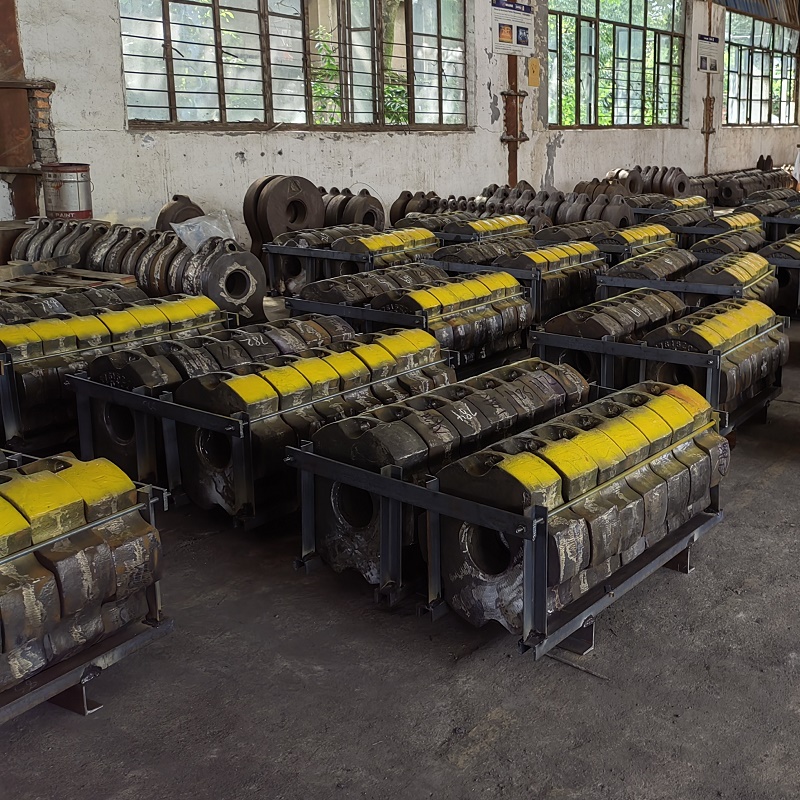
In the rapidly evolving railway industry, durability and efficiency remain paramount considerations for infrastructure maintenance and development. Recent advancements in distance track spikes have brought significant improvements, optimizing performance and longevity. These developments, spearheaded by industry leaders like WUJING MACHINE, reflect a growing demand for more resilient and tailored solutions that address the unique challenges posed by railway environments worldwide.
### Enhancing Railway Stability with Advanced Distance Track Spikes
Distance track spikes are a critical component in railway construction and maintenance. These spikes, used to secure rails to sleepers (or ties), must endure extreme mechanical stresses and environmental conditions. Traditionally, the industry has faced challenges due to wear and tear, leading to frequent maintenance cycles and increased operational costs.
The latest innovations in distance track spikes provide enhanced wear resistance and strength thanks to the integration of high-performance materials and precision manufacturing techniques. These developments enable rail operators to extend maintenance intervals and improve overall track stability, contributing to safer and more efficient rail networks.
### WUJING MACHINE: Pioneering Material Solutions for Railway Applications
A key player driving innovation in this area is WUJING MACHINE, a reputable manufacturer specializing in the production of high-quality metal products tailored for heavy-duty applications. The company offers a versatile range of materials, including standard manganese (Mn) steel, high-chromium (Hi-Cr) iron, alloy steel, and carbon steel. These materials form the backbone of their distance track spike production, ensuring each spike delivers robust performance under demanding operating conditions.
WUJING MACHINE does not stop at standard solutions; it provides customized wearing solutions designed to extend the lifespan of track components significantly. By incorporating advanced materials such as titanium carbide (TiC), ceramic, and chromium-inserted alloys, the company crafts spikes with superior abrasion resistance and mechanical properties. These innovations reduce wear rates and enhance the structural integrity of track fastenings, allowing for longer service intervals and reduced maintenance costs.
### Material Superiority: The Foundation of Long-Lasting Distance Track Spikes
The choice of material is critical in the manufacture of distance track spikes as these components are subjected to repetitive loading and harsh environments. Each material used by WUJING MACHINE offers distinct advantages tailored to specific operational demands:
- **Manganese Steel:** Known for its high impact resistance and ability to harden under stress, standard Mn steel is widely used in railway components where durability is essential.
- **High-Chromium Iron:** This material provides excellent wear resistance and corrosion protection, suitable for parts exposed to abrasive conditions.
- **Alloy Steel:** Featuring a balanced composition of elements, alloy steel offers enhanced mechanical strength and toughness, making it ideal for heavy structural applications.
- **Carbon Steel:** Renowned for its good strength and versatility, carbon steel forms a cost-effective foundation for multiple rail fastening products.
For applications requiring even greater durability, WUJING MACHINE’s tailored solutions incorporating TiC, ceramic, and chromium-inserted alloys elevate performance beyond conventional materials. These inserts dramatically improve wear resistance and hardness, directly translating to extended service life and stronger track stability.
### The Impact on Railway Maintenance and Safety
The adoption of advanced distance track spikes has a direct and positive impact on railway maintenance efficiency and safety standards. Rail networks equipped with these high-quality spikes experience fewer failures related to rail fastening loosening or degradation. This improvement leads to:
- **Reduced Maintenance Intervals:** Longer-lasting spikes mean that inspections and replacements can be spaced further apart, lowering labor and material costs.
- **Improved Track Stability:** Enhanced fastening strength reduces rail movements, minimizing track distortion and vibration that could result in accidents or derailments.
- **Increased Load Capacity:** Stronger spike materials can withstand heavier and more frequent train traffic, facilitating higher throughput and operational flexibility.
Railway operators worldwide recognize these benefits as a means to optimize infrastructure investments and improve overall system reliability.
### Looking Ahead: Industry Trends and Future Developments
The continuous evolution of railway technologies highlights the need for ongoing innovation in component materials and design. Companies like WUJING MACHINE are at the forefront of this transformation, driving research into novel alloys and composite materials that balance cost-effectiveness with exceptional performance.
Emerging trends suggest greater integration of smart materials and surface engineering techniques, such as thermal spraying and laser cladding, to further enhance spike durability. Additionally, environmental considerations inspire the development of eco-friendly manufacturing processes and recyclable materials, contributing to sustainable railway infrastructure.
### Conclusion
The latest advancements in distance track spikes mark a significant step forward in improving railway durability and operational efficiency. Through strategic material selection and customized wearing solutions, manufacturers like WUJING MACHINE are setting new standards that meet the rigorous demands of modern rail networks.
By leveraging high-quality Mn steel, Hi-Cr iron, alloy steel, and innovative inserts like TiC and ceramics, these spikes deliver unmatched resistance to wear and mechanical stress. As a result, rail operators benefit from reduced maintenance needs, enhanced safety, and greater load-bearing capacity—key factors that support the growth and modernization of global railway systems.
In an industry where reliability and performance are non-negotiable, the evolution of distance track spikes epitomizes how targeted innovation in materials engineering can drive tangible improvements, ensuring railways remain a vital and efficient mode of transportation for decades to come.